Why We Migrated All Our Customers to Mage-OS. What Is Mage-OS Anyway, Compared to Magento 2?


Every Magento merchant asks whether the platform will still be here, and still be free, in five years. We stopped answering shop by shop and moved every customer to Mage-OS. Here's why.
Every Magento merchant I know has asked the same question at least once in the last few years: is this platform still going to be here, and still be free, in five years? Answering it shop by shop got old. So we stopped answering it shop by shop, and moved every customer we run onto Mage-OS.
This is why, what Mage-OS actually is, and, to be fair, what still annoys me about the platform after all these years.
What is Mage-OS anyway?
Mage-OS is a community distribution of Magento Open Source. It started with the open letter The Future of Magento in September 2021, signed by more than 1,600 people, and is run by a registered non-profit association. The first distribution, 1.0.0, shipped in October 2023 on top of Magento 2.4.6.
Mage-OS 3.0 (May 2026) is built on Magento 2.4.9. So for a merchant it is still Magento 2: same architecture, same admin, and it aims to stay compatible with the extensions you already use. What changes is who decides what goes in, and how fast.
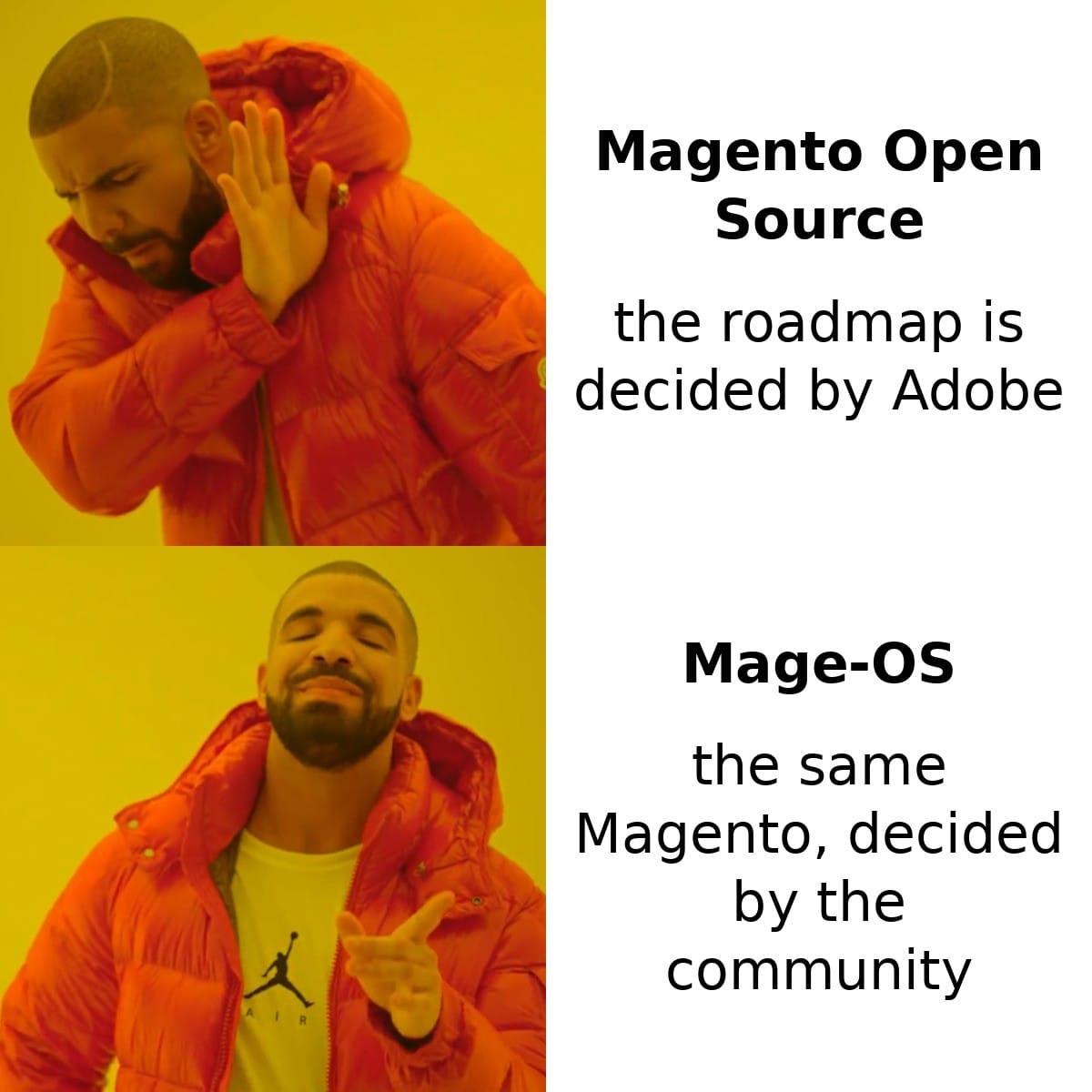
- Magento Open Source is the free edition Adobe publishes alongside its paid Adobe Commerce. Adobe sets the roadmap.
- Mage-OS takes that same core, keeps it compatible, and adds what the community agrees on: an interactive installer, admin activity logging, returns (RMA), AI-assisted translations, PCI DSS 4.0 features, and tools like n98-magerun2 in the box. No Adobe account needed to install it.
Why we moved every customer
1. The community is small, global and actually talks to each other
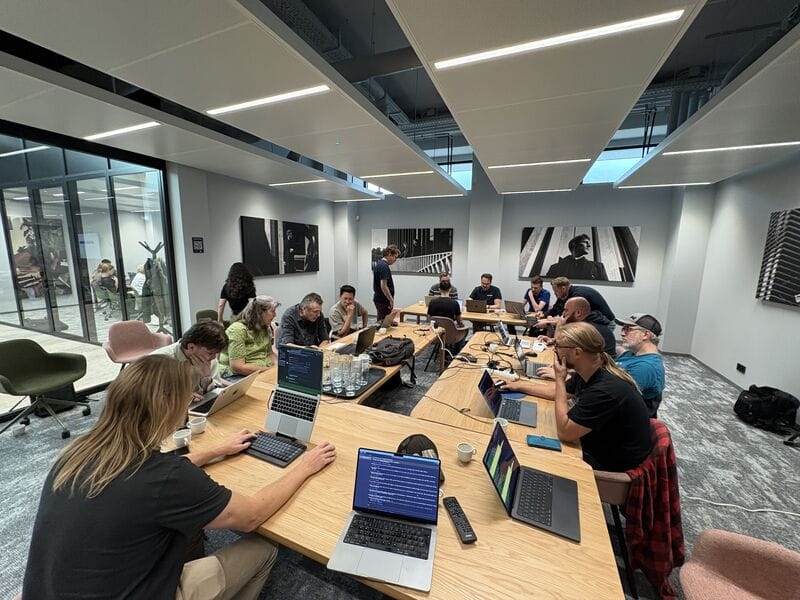
Mage-OS has regular technical calls on Discord, with developers from all over the world, and hackathons where people build genuinely cool things, like the one Made by Mouses hosted in Zwolle on 24 September 2026. If you are curious where the platform is heading, keep an eye on Mage-OS 4.
2. Your background matters less than your contribution
I am not a backend developer who can be compared to some of the veterans in there. But validating a bug, writing a clear issue and proposing a possible fix already helps. With AI today that isn't hard. What it does mean is checking three times before posting: is the fix right, is it really the root cause, and is there already a ticket for it? Nobody wants AI slop in their issue tracker.
3. The AI work coming next is worth waiting for
The Mage-OS 4 roadmap puts AI at the centre: a shared AI foundation, merchant tools, catalog generation, AI-powered search and recommendations. Next to that, Mago, a free open-source AI admin assistant built together with Mage-OS Nederland, already runs on Mage-OS 3. I'm watching that one closely, because it is exactly what we do at StoreFrame: AI agents doing the operations work.
4. Batteries included saves time and money
This one is personal. Most things should simply be there on day one, ready to use or automated. I hate day-two tweaking for things that could have worked the second the shop was installed. Mage-OS keeps pulling those day-two jobs into the box.
5. Adobe uncertainty
This one has been coming for a long time. A short history:
- 2015: Magento 2 goes GA, and Magento 1 merchants are told to plan a migration.
- 2018: Adobe buys Magento for $1.68 billion. Magento 1 support was meant to end in November 2018; it was stretched to June 2020, and on 30 June 2020 it ended. Many merchants rebuilt their whole shop because of a date they did not choose.
- 2021: Magento Commerce becomes Adobe Commerce.
- 2025: Adobe announces Adobe Commerce as a Cloud Service and Adobe Commerce Optimizer, both SaaS.
- Today: Adobe's lifecycle and release pages are written for Adobe Commerce. Magento Open Source is barely mentioned.
Adobe has not said Magento Open Source is going away. It just says very little about it, and its energy clearly goes into SaaS. After the Magento 1 deadline, we would rather not bet our customers' shops on silence again. Mage-OS keeps the open-source core in community hands, whatever Adobe decides.
6. It's going to get faster and more adaptable
Mage-OS ships features every few months, and things like a worker-mode module for FrankenPHP are being built in the open. Some people clearly put a lot of their own time into this. Kudos to the Mage-OS board and the community.
What I still don't like about Magento
It wouldn't be fair to only praise it. After all these years, here is what still bugs me.
1. Installing and automating it from scratch is still painful
We solved it with our own wizard, and Mage-OS 3 added an interactive installer, which helps. But it is not at WordPress level yet, even with all these awesome people working on it.
2. Uncached pages are still slow, especially in the admin
Nebula, a modern admin theme from Qoliber built on Alpine.js and Tailwind, might be the thing that finally fixes the admin. But if I had to choose, the Laravel Filament way is a much better way to build an admin UI.
3. We should be heading to worker mode
FrankenPHP or OpenSwoole, with the application kept warm between requests. In our own tests FrankenPHP worker mode made single requests faster, but it is still nowhere near Filament or SPA speed.
4. It's not an SPA or PWA
Yes, yes, this one is personal preference. I don't like JavaScript and I will never write it by hand. But AI has been great at writing it, and coming from a UX and UI background, I think a fluent interface is one of the most important parts of the shopping experience and of managing a webshop. The micro-animations, the fluidity, the consistency of libraries like shadcn are priceless.
So, Mage-OS
None of this made us want to leave Magento. It made us want Magento in hands that will still be maintaining it, openly, in ten years. For us that is Mage-OS.
A founder, an engineer at heart, an independent consultant who seek alternatives to the mainstream — Currently focused in burning AI tokens to deliver the best agentic e-Commerce experience.
More Articles
More Articles

One decision saved us setup time on every store, kept catalogue pages fast and stopped more bots: a self-hosted, Turnstile-style challenge that installs itself.

More than ten detectors score every request before anything is decided. Here is the scoreboard, what each signal is bad at, and the customers we annoyed on the way.

Every bot says it is Chrome. The handshake says otherwise. How we read JA4 and HTTP/2 fingerprints at the edge, why we needed both, and where they fail.

There are a dozen ways to put a web server in front of Magento. I tried most of them and landed on OpenResty — NGINX with Lua superpowers. Here's the honest case for it, and against the alternatives.

Half of a Magento store's traffic are bots, and today's scrapers solve puzzles and rent home internet. Here is the layered strategy we run, with real numbers.

SessionReaper, PolyShell and StyleSmuggler hit different parts of Magento months apart, from different people. Side by side they stop being three stories and start looking like one reused recipe.