Hypernode is Great at Magento Hosting. Why I Built StoreFrame Anyway.


Hypernode is genuinely great at Magento hosting. So why did I build StoreFrame anyway? The answer was never about where a store runs.
I started where a lot of Magento people start: the frontend. I built themes, and for years that was the whole job. I was happy there — until I tried to grow past it and a Magento upgrade bit me, hard. (Hyva makes the theme layer a much nicer place to live now. I’ll come back to that.) The lesson stuck: if I wanted to keep clients fast and take on more of them without cloning myself, I had to look past the theme.
Honest confession: I’m not a backend developer. I still couldn’t tell you with a straight face what a private versus a public method really changes. So renting hosting — letting people who actually understand servers run the servers — was the only sensible call. Hypernode especially: secure, reliable, properly tuned for Magento. (Somewhere in the back of my head was a smaller, cheekier thought too: if I could ever match that for less, I’d pocket the difference. A solo dev is allowed to dream.)
Then the walls went up
I got curious about performance, and everything I reached for was locked.
A newer PHP version? Not yet. MariaDB instead of MySQL? This hosting doesn’t allow it. Swap Redis for KeyDB? Sure — except no root, so I couldn’t install it. Tengine, Alibaba’s nginx fork? I even tried building it from the makefile myself — nope, slow, and nowhere to run it anyway. The Elasticsearch plugin ElasticSuite needs? Off the table. Nope, and nope again. Every change that might have made a store faster ended at the same wall.
And it keeps happening. Today everyone’s talking about ARM and FrankenPHP — genuinely exciting for Magento. Where does a curious developer actually go to test them on managed hosting? Nowhere. You read the post and close the tab.
One layer at a time
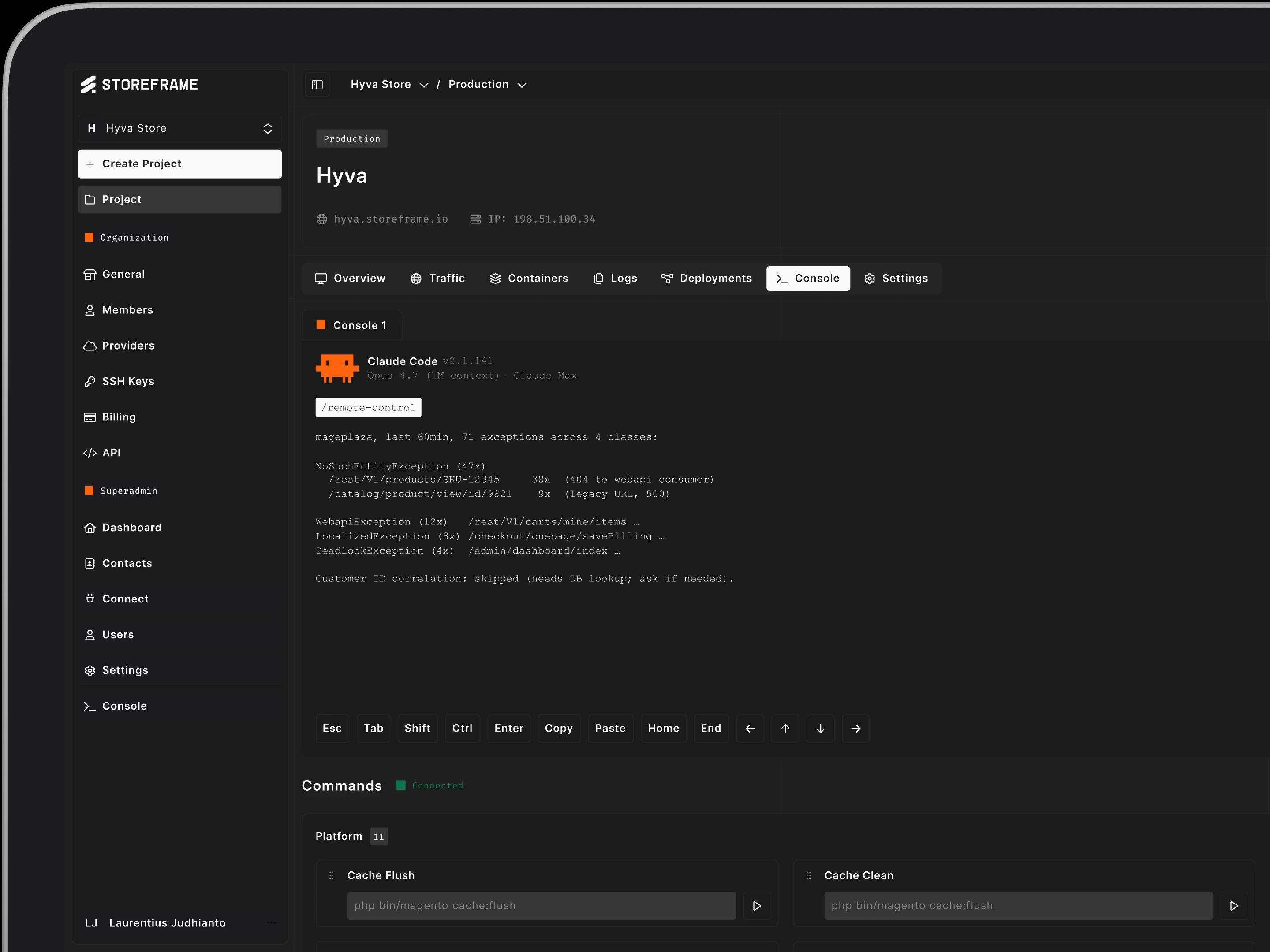
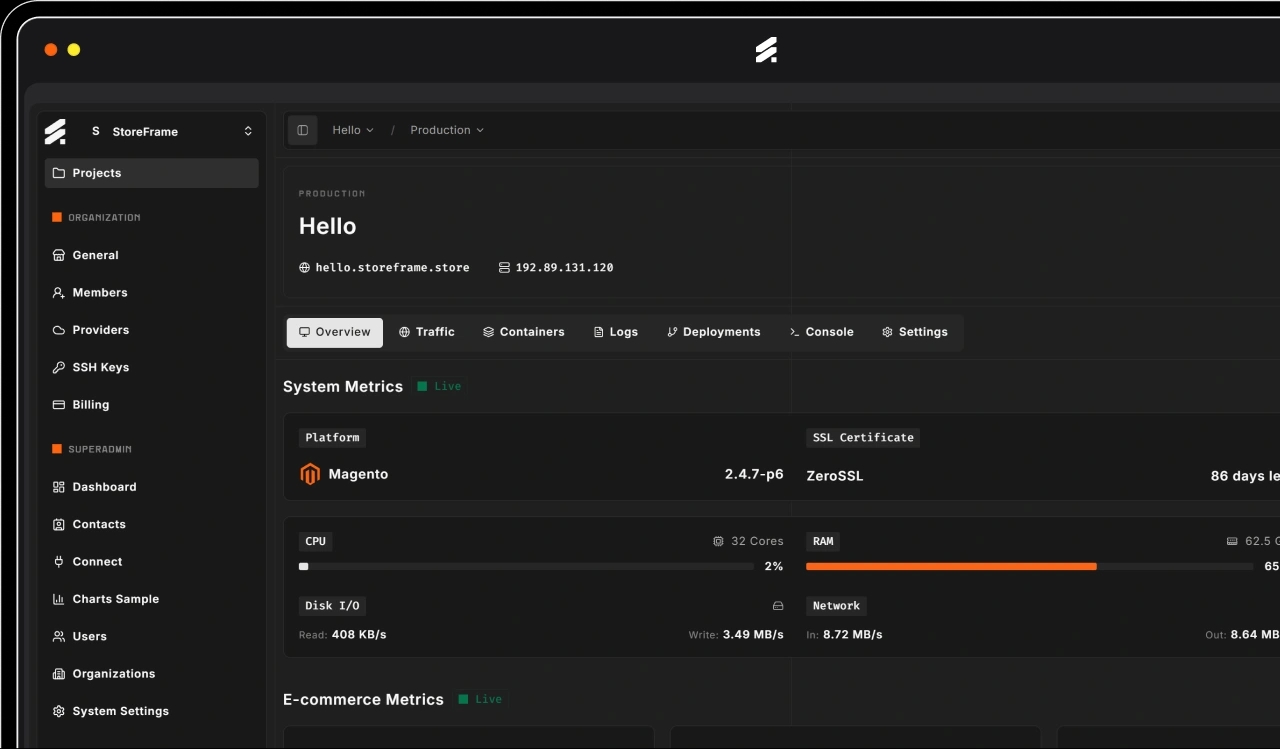
So I stopped waiting for permission and started doing it myself — one layer at a time. First, a server I could actually log into as root. Then the stack on top, tuned by hand. Then I wanted to see what was happening — traffic, performance, what was slow and when — so I wired up Grafana and proper monitoring. Then it needed to survive a reboot. Then a second client, then a tenth — each one ideally identical to the last, so I wasn’t relearning every box. Every problem I solved uncovered the next one underneath it.
And I massively underestimated how hard running your own hosting actually is. There’s a reason managed hosts exist and charge what they do. For a while it felt like I’d traded a cage for a pile of pager duty — more freedom, yes, but every layer now mine to keep alive, alone.
And then AI arrived
And then it all made sense.
It started by covering the technical ground I don’t have. Building the HUB is genuinely hard, and I’d know: this is my third attempt at it. The first two never matched what I had in my head — this one finally did, across code, design, UX, and sheer completeness. AI closed the gaps I couldn’t close alone, and that on its own is worth a 10x engineer.
So — did it scale?
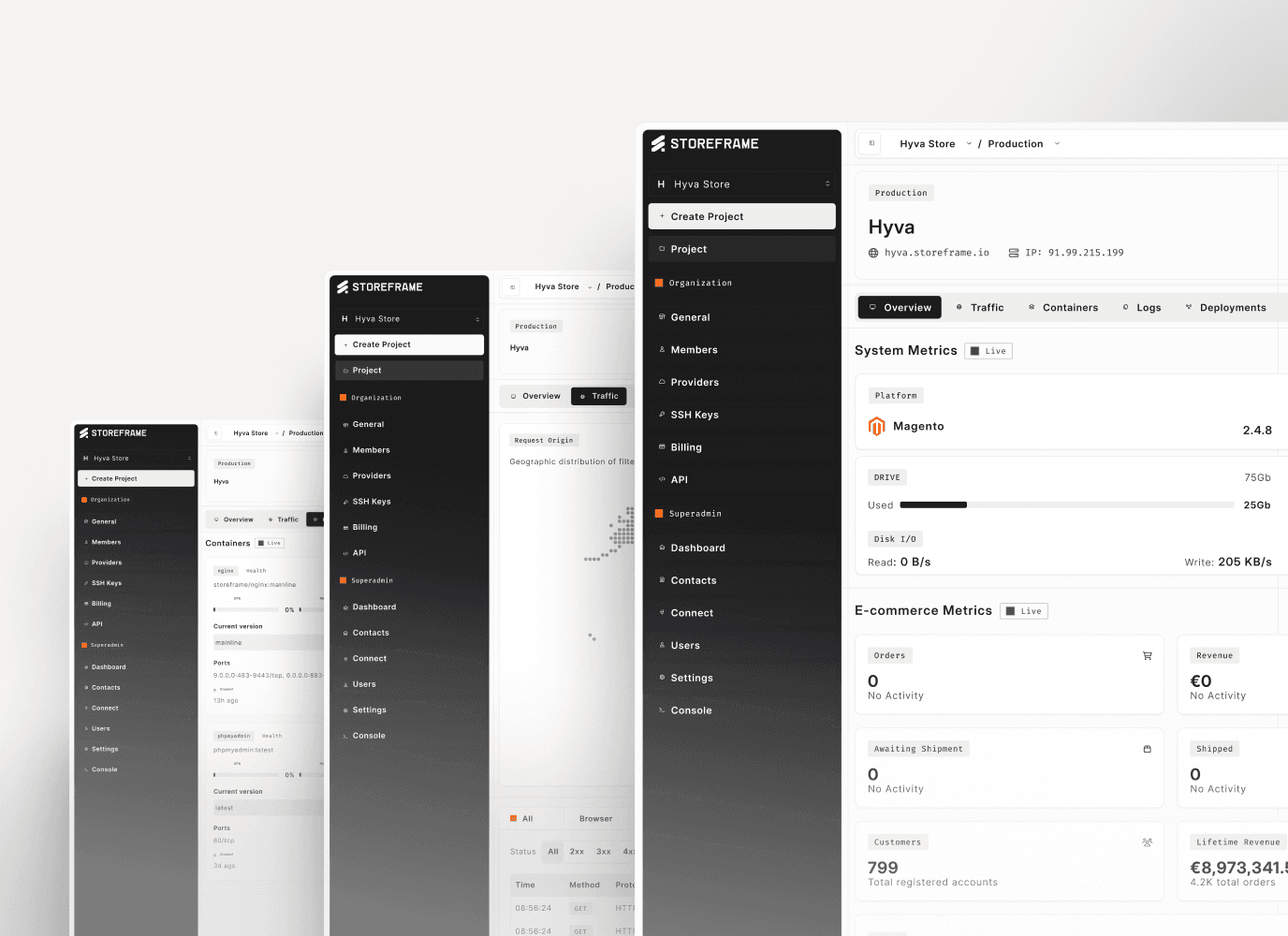
That was the whole point: going from one solo developer to running more stores without becoming many people. Did it work? Yes. A standardised stack I fully control, plus an AI that closes the gaps I can’t, means I can take on more without drowning in it. Hypernode is still great Magento hosting — I built StoreFrame anyway because I couldn’t stop tinkering, couldn’t scale myself, and AI is what finally turned the whole pile of layers into leverage. You can read more here https://www.storeframe.io/how-were-different
The one thing I haven’t put to the test here is raw performance — whether a setup like this can actually keep pace with the premium stacks. That’s the next post: a well-tuned Luma theme on Hetzner bare metal against Hypernode with Hyva. Stay tuned.
This is StoreFrame: a standardised, fully-tuned Magento stack on your own cloud, operated by AI plus a human — so one developer can run many stores without drowning.
See how StoreFrame worksA founder, an engineer at heart, an independent consultant who seek alternatives to the mainstream — Currently focused in burning AI tokens to deliver the best agentic e-Commerce experience.
More Articles
More Articles

So you know the person behind it. Not a sales pitch, just what StoreFrame is to me: a home for my team, my notes as working code, and the impossible thing I'm glad I tried to build.

A PHP vulnerability dropped the night before Meet Magento Germany. Ten things I took home: about people, patching, merchants who choose offline, and why badges don't stop bugs.

PWA Studio, Vue Storefront, GraphCommerce, Rapidez, Breeze and Hyva: why headless Magento kept losing to cost, and why AI that writes JavaScript fluently may finally flip the verdict.

Every Magento merchant asks whether the platform will still be here, and still be free, in five years. We stopped answering shop by shop and moved every customer to Mage-OS. Here's why.

One decision saved us setup time on every store, kept catalogue pages fast and stopped more bots: a self-hosted, Turnstile-style challenge that installs itself.

More than ten detectors score every request before anything is decided. Here is the scoreboard, what each signal is bad at, and the customers we annoyed on the way.